13 November 2026 · News
From concept to point of sale: keys to executing successful campaigns
Launching a campaign means coordinating many processes so that a creative idea becomes a visible reality at the point of sale.
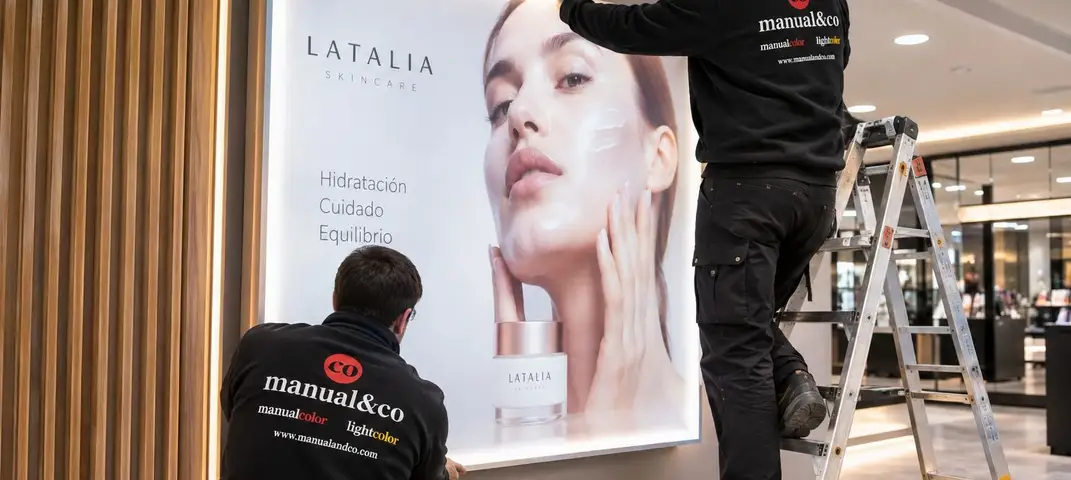
From adapting the designs to manufacturing the elements, logistics and the final installation, every stage directly shapes the result.
For brands, marketing and trade marketing departments and agencies, one of the main challenges is making sure all these processes run in a coordinated way, on schedule and with the expected quality.
In this context, having an industrial partner able to offer an end-to-end view of the project is an advantage that simplifies management and ensures consistent execution.
From creativity to technical feasibility
Every campaign starts with an idea.
A new launch, a promotion, an image refresh or a retail activation may call for completely different visual communication solutions. However, before manufacturing starts, it is necessary to analyse how each proposal will be brought to life.
Dimensions, materials, mounting systems, site conditions and transport requirements must all be considered from the earliest stages. Proper technical planning makes it possible to spot potential difficulties, optimise resources and adapt the designs to the available production processes.
The goal is not to limit creativity, but to find the best way to make it real.
Prototyping and validation before production
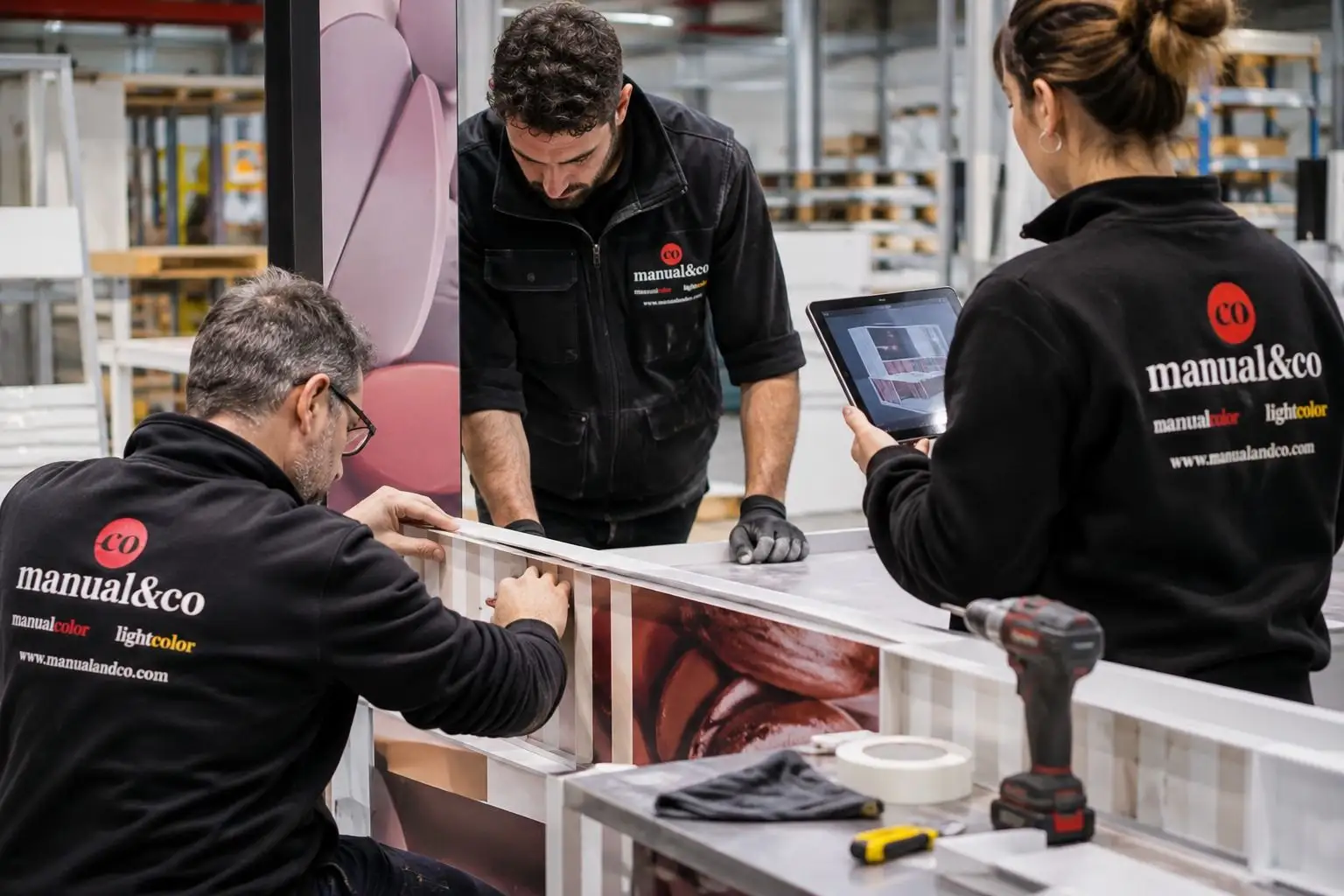
In POS, retail furniture and custom element projects, the prototyping phase can be decisive. Building a first unit makes it possible to check aspects that cannot always be assessed from drawings or digital renders alone, such as structural stability, finishes, ease of assembly, product presentation and how the different materials come together.
Validating the prototype also helps identify possible improvements before starting a larger production run.
This process is especially useful in campaigns that require many units for different stores. Taking time over the initial validation can avoid later changes, reduce issues and make production more efficient.
Coordinated production and quality control
Once the technical aspects are defined, manufacturing begins.
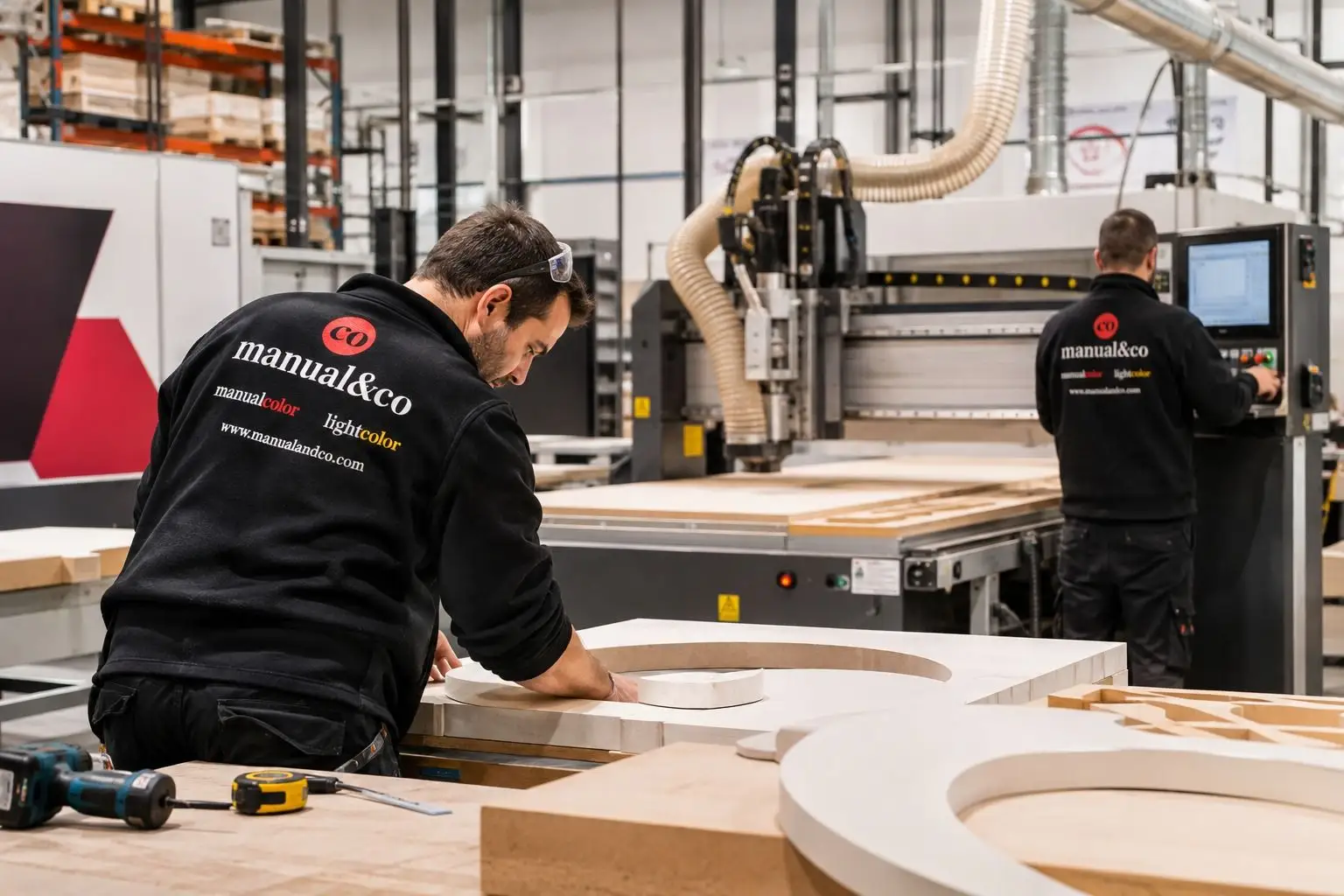
Retail projects can combine very different processes: digital printing, cutting and machining, structure fabrication, furniture production, finishing and component assembly.
Coordinating these operations properly is essential to meet deadlines and keep the result consistent.
In-house manufacturing capacity makes communication between production phases easier and allows closer follow-up of the work.
Quality control must be present throughout the process, from material selection to the inspection of finished units.
Dimensional accuracy, colour reproduction, the strength of the elements and the quality of the finishes all directly affect how the brand is perceived in the end.
The challenge of multi-store campaigns
When a campaign has to be rolled out simultaneously across different stores, complexity increases.
Each point of sale may have its own dimensions, access, mounting conditions and particular needs. Launch dates are also usually tied to retail calendars that leave little room for the unexpected. That is why multi-store campaigns require especially careful planning.
It is important to define quantities correctly, identify the particularities of each location and organise the preparation of materials to make distribution and installation easier.
Coordination between manufacturing, logistics and installation teams keeps the image consistent and minimises differences between stores. For brands, this consistency is essential.
Logistics and installation: the last phase counts too
Manufacturing a retail element is not the end of the project.
Transport, handling and installation affect both how well it is preserved and its final result.
A POS solution may leave the factory with an excellent finish, but it needs to reach the store in perfect condition and fit the available space properly. Packaging, transport volume, the weight of the parts and ease of assembly are just as important.
Installation must follow the technical specifications and visual criteria defined for the campaign.
This phase requires coordination, precision and the ability to adapt to the real conditions of each store.
One point of contact to simplify management
One of the main benefits of working with an end-to-end supplier is having a single point of contact who can coordinate the different stages of the project.
Bringing different production capabilities together also helps anticipate technical needs and make decisions with the whole process in mind. In projects involving multiple materials, suppliers and locations, this overall view improves efficiency and reduces operational complexity.
For marketing teams and agencies, this structure makes communication easier and lets them focus on the campaign's strategic goals.
Manual Color: industrial capacity for brands
A campaign requires planning, technical knowledge, coordination and attention to detail.
At Manual Color we work to offer end-to-end solutions that connect our clients' communication needs with production and installation processes. Our experience in large-format printing, POS manufacturing, retail furniture, cutting and machining and solutions for spaces lets us take on projects of different kinds and complexity.
We support brands, marketing, trade marketing and visual merchandising departments and agencies in bringing their projects to life, looking for solutions that combine quality, functionality and visual consistency.
Behind every well-executed campaign there are tangible results.
We produce ideas. We transform spaces.
Related posts
13 November 2026
Industrial capacity: the value of end-to-end manufacturing in POS and retail projects
In an increasingly competitive retail environment, brands need solutions that combine creativity, quality, functionality and speed of execution. At Manual Color we see production as a strategic part of every project.
Read more: Industrial capacity: the value of end-to-end manufacturing in POS and retail projects
8 July 2026
A commitment to sustainability
Manual Color: a commitment to sustainability Eco-friendly printing with the future in mind At Manual Color we work to a standard where quality, colour and image must always be at their best. We
Read more: A commitment to sustainability
8 July 2026
The advantages of using acrylic
Acrylic: a material on trend. Direct printing. A material that is on trend right now thanks to its high quality and its exclusive look. Printed acrylic is one of the best options
Read more: The advantages of using acrylic