
8 July 2026 · News
What is PVC-free material?
An increasingly common alternative: PVC-free material
For more than 20 years now, companies, governments and non-governmental organisations (Greenpeace, for example) have consistently been working toward one goal: freeing us all from PVC. Throughout history this material has spread and now forms part of practically everything around us. The first action against PVC came from the furniture and toy sectors, when IKEA and LEGO began gradually replacing their usual products with PVC-free ones. This example, together with the discovery that it is toxic to humans, has been key to the path that we at Manual Color, along with other companies from various sectors, are travelling.
What is PVC?
It is important to understand why this material is being phased out, and to do so we need to know what it is. Polyvinyl chloride, known as PVC, is a polymer obtained by combining chlorine and ethylene. At that point, as what is called ethylene dichloride, it is subjected to high temperatures to obtain chloride gas, and through polymerisation the powder known as PVC resin is created. At this stage it should be noted that chlorine belongs to the halogen group of chemical elements, which are highly corrosive and toxic in their pure state.
Since unmodified PVC is hard and brittle, phthalates must be added to make it more malleable, chemicals that are highly harmful to human health and linked to conditions such as asthma, infertility and even cancer. As we can see, PVC is not only harmful to the environment but also to people and their state of health.
A growing variety of PVC-free materials
Continuous research and innovation in sectors such as digital printing are providing ever more opportunities to use materials that are not only non-toxic but also eco-friendly, recycled and recyclable.
PVC-free vinyls and laminates: the usual PVC vinyl, a combination of sodium chloride with petroleum, made the traditional material polluting and very hard to dispose of. Instead, we now work with alternatives based on polypropylene and polyester, which are more neutral plastics and easier to recycle, since they are made up of carbon and hydrogen.
By using adhesives that contain neither plastics nor chlorine, they become the perfect option for use in retail or décor, since we use eco-friendly inks with Greenguard Gold certification on them.
Printing banners are also seeing a notable shift toward sustainability, as the traditional and more polluting kind is giving way to PVC-free material such as polyester, which offers similar strength and appearance but is a recyclable component that does no harm.
Rigid materials, meanwhile, are not lagging behind. While there are still more traditional options containing components such as chlorine, today they are made through more neutral processes, and more and more PVC-free variants are appearing, such as honeycomb board, which is spreading rapidly, as well as other paper-based compounds like Dispa, Holding, Eco Foam, etc., FSC®-certified and, thanks to their composition, highly rigid and resistant.
As you can see, the use of PVC-free material is the order of the day, and at Manual Color we have been part of this eco-friendly movement for many years now. Specifically, in addition to the Clean CO2 plan, we have been able to replace common materials such as Duratrans or photo paper with their eco-friendly, non-toxic version, and installing solar panels on our façade has made us an energy-neutral company. The work we have been doing in this aspect of the digital printing sector goes back a long way, and its results, besides achieving the environmental impact we at Manual Color strive for, have been rewarded with the 2022 Award for Business Project in Integrated Management and Sustainable Production.
Related posts
13 November 2026
From concept to point of sale: keys to executing successful campaigns
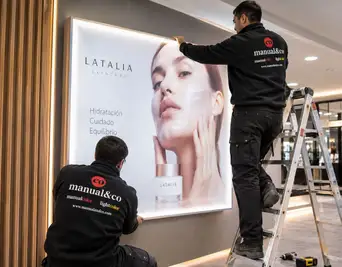
Launching a campaign means coordinating many processes so that a creative idea becomes a visible reality at the point of sale. From adapting the designs to the final installation, every stage shapes the result.
Read more: From concept to point of sale: keys to executing successful campaigns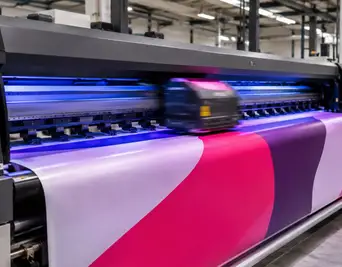
13 November 2026
Industrial capacity: the value of end-to-end manufacturing in POS and retail projects
In an increasingly competitive retail environment, brands need solutions that combine creativity, quality, functionality and speed of execution. At Manual Color we see production as a strategic part of every project.
Read more: Industrial capacity: the value of end-to-end manufacturing in POS and retail projects
8 July 2026
A commitment to sustainability
Manual Color: a commitment to sustainability Eco-friendly printing with the future in mind At Manual Color we work to a standard where quality, colour and image must always be at their best. We
Read more: A commitment to sustainability